
Plan Revenue Before You Build
A music app that can't make money won't last, no matter how good it sounds. Your monetization model shapes your features, your licensing costs and even your tech stack, so it belongs in the first planning session, not after launch.
Here are the main ways music apps make money, and how to choose.
1. Subscriptions
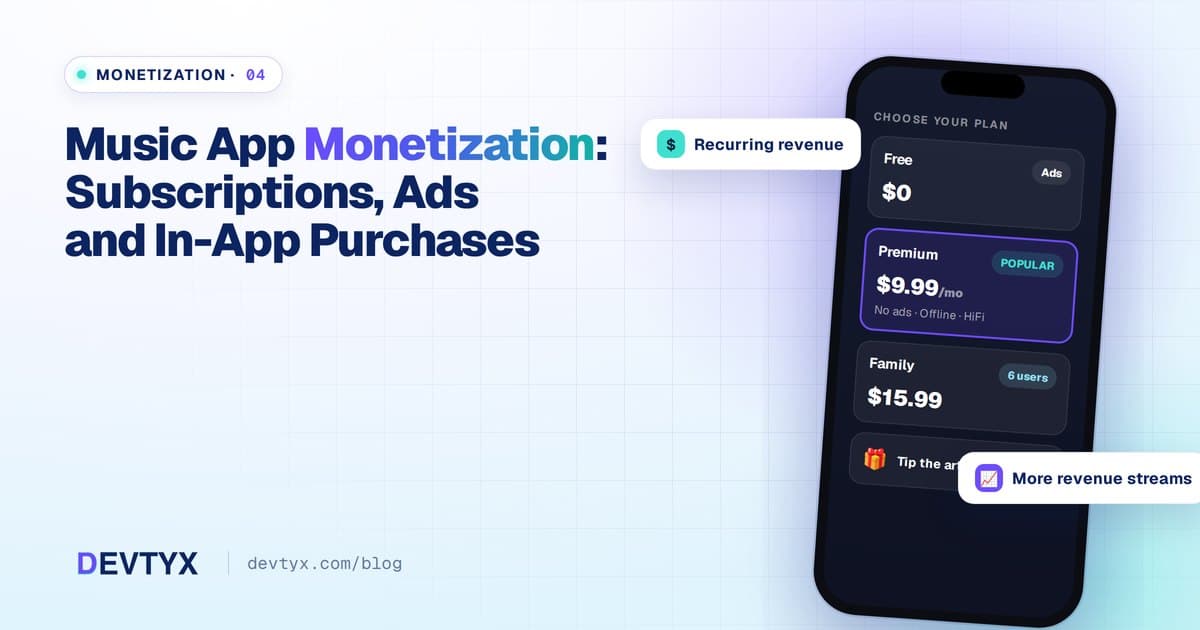
Subscriptions are the backbone of music streaming. Users pay monthly or yearly for unlimited listening, offline downloads and no ads.
Common plan types:
- Individual premium
- Family plans for several accounts
- Student plans at a discount
- Annual plans with a lower effective monthly price
Best for: streaming platforms, podcast apps with premium content, music learning apps and meditation apps.
Build requirements: Apple In-App Purchase, Google Play Billing, Stripe or similar for web, receipt validation on your server, trial and grace-period handling, and a clear upgrade flow.
2. Freemium
Freemium combines a free tier with paid upgrades. The free tier attracts users; limits such as ads, shuffle-only play or no downloads encourage upgrades.
The key is balance. A free tier that's too limited drives users away. One that's too generous gives people no reason to pay.
3. Advertising
Ads monetize listeners who won't pay.
| Ad type | How it works |
|---|---|
| Audio ads | Short spots between tracks or episodes |
| Display and banner ads | Shown in the app while browsing |
| Video ads | Optional, often rewarded with skips or ad-free time |
| Sponsored playlists | Brands sponsor curated content |
| Dynamic ad insertion | Ads stitched into podcasts at play time |
Audio ad platforms typically use the VAST and VMAP standards. Keep frequency reasonable; too many ads hurts retention more than it helps revenue.
4. In-App Purchases
One-time purchases work well for:
- Buying individual tracks or albums
- Unlocking sound packs, instruments or effects in creation apps
- Premium lessons in music learning apps
- Song packs in karaoke apps
Note on app store fees: Apple and Google take a commission on digital purchases, commonly 15–30% depending on your program and plan length. Check current rules before setting prices.
5. Fan Subscriptions and Tipping
Artist-first platforms let fans support creators directly through monthly memberships, one-time tips and exclusive content. Your platform takes a small share. This model is growing fast in indie music apps. See How to Build a Fan App for Artists and Bands.
6. Marketplace Commissions
If your app lets creators sell beats, samples or licenses, you earn a commission on each sale. Read How to Build a Beat Marketplace App.
7. Merch, Tickets and Partnerships
Merch stores, ticket sales and brand partnerships add revenue without charging listeners directly. They fit fan apps, live streaming apps and festival apps.
8. B2B and White-Label Licensing
Some music platforms earn by licensing their technology to radio networks, gyms, retailers or churches. See White-Label Music Streaming: Is It Right for You?.
How to Choose Your Model
| App type | Strongest models |
|---|---|
| Streaming platform | Freemium + subscriptions + audio ads |
| Podcast app | Premium episodes + dynamic ads |
| Artist / fan app | Fan subscriptions + merch + tips |
| Music creation tool | In-app purchases + subscriptions |
| Learning app | Subscriptions + course purchases |
| Beat marketplace | Commission per sale + seller plans |
Most successful apps combine two or three models. Start with one primary model, then add others once you understand user behavior.
Licensing Affects Your Margins
If you stream licensed music, rights holders receive a large share of revenue. That's why many new apps focus on indie content, original catalogs or companion experiences. Learn more in Music Licensing Explained for App Founders.
Frequently Asked Questions
What is the best monetization model for a music app?
For streaming apps, freemium with premium subscriptions and audio ads is the most common model. Fan apps do well with fan subscriptions and merch, while creation tools often use in-app purchases.
How much do Apple and Google take from music app subscriptions?
Apple and Google typically take 15–30% of digital purchases and subscriptions, depending on your program and how long a subscriber has stayed. Check current store rules before setting prices.
Can a free music app make money?
Yes. Free apps earn through audio and display ads, sponsorships, merch, tipping and optional upgrades. The key is balancing ad frequency so it does not hurt listener retention.
Should I combine several revenue models?
Most successful music apps combine two or three models, such as subscriptions plus ads plus merch. Start with one primary model, then add others once you understand user behavior.
Monetize With the Right Technical Foundation
Subscriptions, ads and purchases all need reliable payment flows, server-side validation and analytics. DEVTYX builds these into music apps from day one. As a hybrid app development company, we implement in-app billing once in a cross-platform codebase that works on iOS and Android.
Talk to our music app developers about the right revenue model for your app.