
A Growing Market for Producers
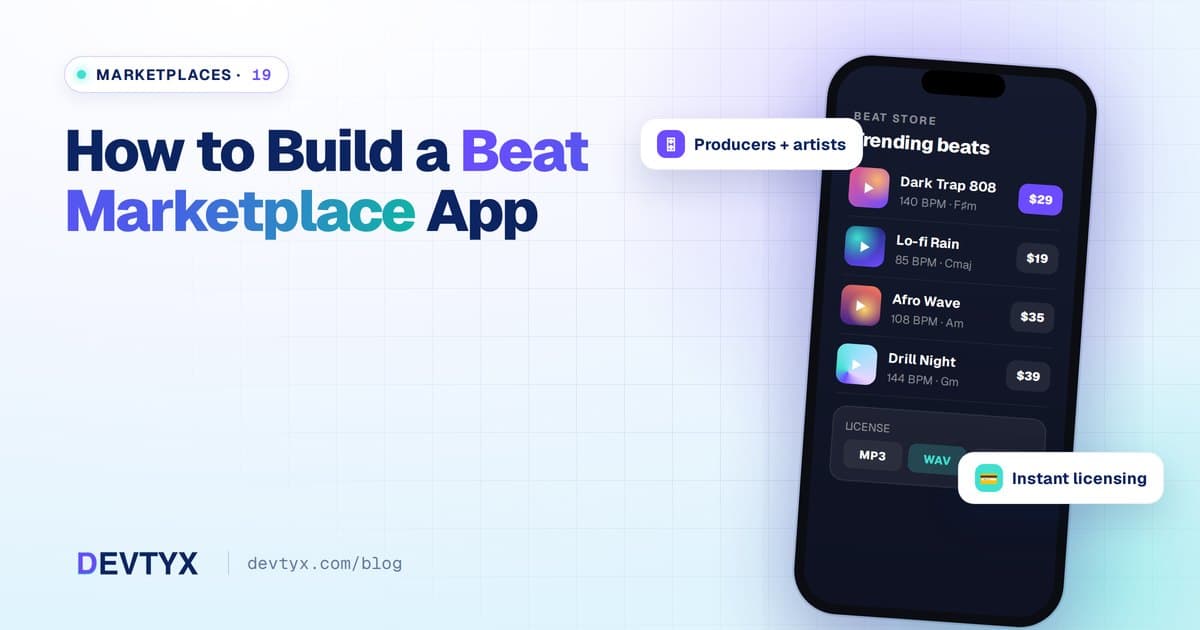
Independent artists buy beats online every day, and producers want better places to sell them. A beat marketplace connects the two: producers upload beats and set license terms, and artists preview, buy and download instantly.
Core Features
For Buyers (Artists)
- Browse and search by genre, mood, BPM, key and producer
- Instant preview with a waveform player
- Tagged previews to prevent free downloads
- Clear license options and pricing
- Cart, checkout and instant downloads
- Purchase history and license documents
- Favorites and producer following
For Sellers (Producers)
- Beat upload with metadata (BPM, key, genre, tags)
- License tier setup and pricing
- Automatic audio tagging for previews
- Stem and track-out file delivery
- Sales dashboard and analytics
- Payout management
- Storefront and profile pages
- Discount codes and bundles
For Admins
- Producer verification
- Content moderation and copyright checks
- Commission settings
- Dispute handling
- Featured placements and promotions
Common License Types
| License | Typical files | Typical rights |
|---|---|---|
| Basic lease | MP3 | Limited streams and sales, non-exclusive |
| Premium lease | WAV | Higher limits, non-exclusive |
| Unlimited lease | WAV plus stems | Unlimited use, non-exclusive |
| Exclusive rights | All files | Full exclusive use; beat removed from store |
Your app should generate a license agreement automatically for each purchase. Have a music attorney review the templates.
Protecting Producers' Work
- Voice tags or audio watermarks on previews
- Low-bitrate streaming previews only
- Secure, expiring download links after purchase
- Content ID or audio fingerprinting to detect re-uploads
- Takedown process for copyright claims
Payments and Payouts
Marketplaces need split payments: the buyer pays, the platform takes a commission and the producer gets paid. Services like Stripe Connect handle this, including seller onboarding and tax forms in supported countries. Note that selling digital licenses inside mobile apps may be subject to app store payment rules, so plan your checkout flow early.
Monetization
- Commission on every sale
- Monthly seller plans with lower commissions or more uploads
- Promoted listings for producers
- Premium buyer memberships
Tech Stack
| Layer | Options |
|---|---|
| Apps | Next.js web app plus Flutter or React Native mobile apps |
| Audio | Waveform generation, transcoding, tagging with FFmpeg |
| Storage | AWS S3 or Google Cloud Storage with CDN |
| Payments | Stripe Connect or similar marketplace payments |
| Search | Algolia or Elasticsearch with BPM and key filters |
| Backend | Node.js or Python, PostgreSQL |
Cost and Timeline
| Scope | Estimated cost (USD) | Timeline |
|---|---|---|
| Single-producer beat store | $15,000 – $35,000 | 2 – 3 months |
| Multi-vendor marketplace (web) | $50,000 – $100,000 | 4 – 6 months |
| Marketplace with mobile apps and advanced tools | $100,000 – $200,000+ | 6 – 9 months |
Frequently Asked Questions
How do beat marketplaces protect producers?
They use tagged or watermarked previews, low-bitrate streaming, secure expiring download links and audio fingerprinting to detect unauthorized re-uploads.
What license types do beat marketplaces offer?
Common tiers include basic leases (MP3), premium leases (WAV), unlimited leases (WAV plus stems) and exclusive rights that remove the beat from sale.
How do beat marketplaces handle payments?
Marketplace payment services such as Stripe Connect split each sale between the platform and the producer and manage seller onboarding and payouts.
How much does it cost to build a beat marketplace?
A single-producer store costs about $15,000–$35,000. A multi-vendor web marketplace costs $50,000–$100,000, and adding mobile apps can exceed $100,000.
Build Your Beat Marketplace With DEVTYX
DEVTYX builds custom music app development projects including beat marketplaces, sample stores and creator platforms. As a hybrid app development company, we deliver web, iOS and Android experiences that share one backend.
Talk to our music app developers about your marketplace.